
Article | 12 minutes read

More than 3,000 operators, affiliates, and regulators gathered at the Metro Toronto Convention Centre from May 19–21, 2026, for the SBC Summit Canada. Two provincial heavyweights — Ontario and Alberta — stole the show. Their message was loud and clear: growth and player protection are not mutually exclusive.
Canada is treating the gaming industry as a trusted partner rather than an adversary. For European observers accustomed to rigid, restrictive regulatory frameworks, the Canadian approach offers a striking contrast.
iGaming.com CEO Prof. Dr. Andreas Ditsche attended the summit and returned with a behind-the-scenes account of how Canada is redefining responsible gambling, cutting bureaucratic red tape, and reshaping the affiliate landscape from the ground up.
Stan Cho, Ontario’s Minister of Tourism, Culture and Gaming, opened the summit with a masterclass in industry-led regulation. His core message was a refreshing reality check for global regulators:
Stan Cho, Minister of Tourism, Culture and Gaming, Ontario
The numbers Cho cited at the summit support his confidence:
Cutting red tape does not mean cutting corners on safety. Ontario has funneled $70 million directly into player protection initiatives. The province’s sophisticated player protection program, BetGuard, was widely praised at the summit as a triumph of using industry feedback to build practical, tech-driven safety barriers.

This dual approach — streamlined regulation alongside serious investment in player welfare — is precisely what makes Ontario’s model stand out. The argument is straightforward: a thriving, regulated market generates the revenue and data needed to protect players properly. Strangle it, and the harm moves underground where no protections exist.
If Ontario is the established pioneer, Alberta is the rapidly emerging newcomer. Dale Nally, Alberta’s Minister of Service and Red Tape Reduction, delivered an insightful presentation, especially for attendees accustomed to European models.
While countries like Germany often strangle their online markets with rigid restrictions that inadvertently fuel the black market, Alberta is taking a refreshing, business-first approach ahead of its regulated market launch.
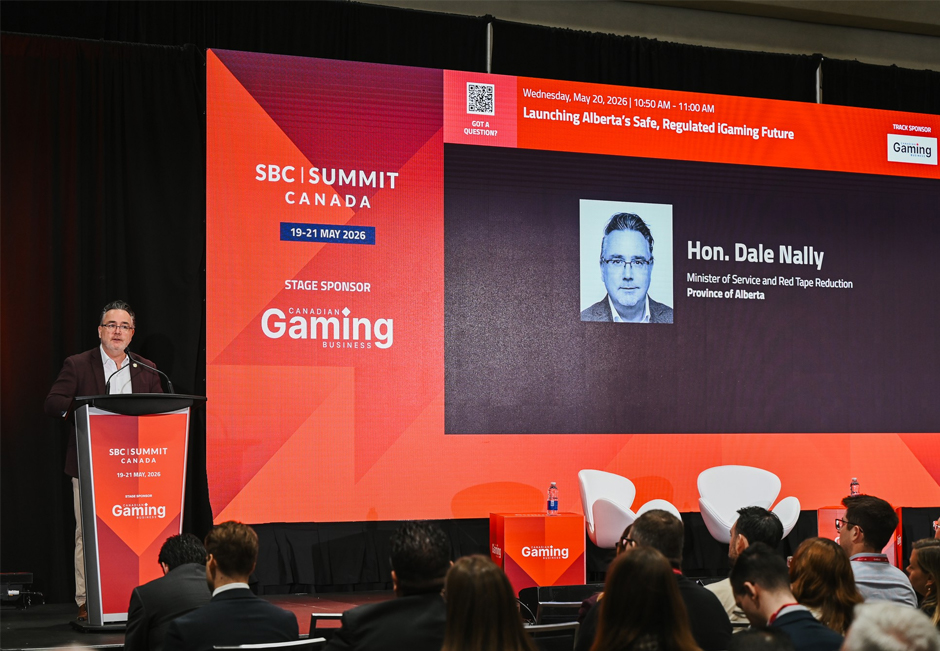
Nally openly stated that the “big red button” to stop online gambling simply does not exist. Instead of fighting human nature and driving players underground, Alberta is building a robust legal marketplace that is resilient against illicit operators. True to the province’s “Strong and Free” motto, the government is pursuing a “light-touch” regulatory approach:
Alberta is not compromising on safety; instead, it is taking a smarter approach. Rather than restricting how adults play, the province is investing heavily in harm mitigation:
Nally’s pitch to the industry was direct. He closed with a clear invitation: “Gambling industry, please come to Alberta!”
Beyond the political stage, panel discussions at the summit in Toronto revealed a profound structural shift in the marketing backend of Canadian iGaming. The consensus was unambiguous: the traditional affiliate model is dead. User behavior has evolved faster than affiliate strategies, forcing a complete rethink of how traffic is acquired and retained.
Operators are no longer looking for raw, unsegmented traffic. They want specific consumer cohorts. The key trends emerging from the panels:
With Canada operating on a province-by-province basis, navigating the regulatory patchwork is highly complex. The solution gaining traction is AI compliance agents. Affiliates are using tools that ensure marketing materials instantly adapt to comply with varying provincial rules.
Insiders predict that within 12 months, affiliate sites will fully customize their interfaces in real time based on incoming user profiles.
Affiliates can no longer function as merely a “great tool” or a simple list of review links. They must become full-scale brands. The summit distilled the winning formula into four pillars:
As the discussion around ethical marketing in iGaming continues to evolve, trust and compliance are becoming the deciding factors in affiliate visibility.
As the Canadian market matures throughout 2026, the metrics of success are being rewritten. The panel concluded with a vital warning for marketers: there is little credit or financial reward for retaining a player who has already converted. The entire ecosystem is shifting toward early-stage retention and lifestyle entertainment.
If a platform wants to survive in Canada’s hyper-competitive, highly regulated future, it must ensure that users genuinely prefer interacting with the affiliate platform itself rather than immediately bypassing it for the operator.
Many summit visitors and speakers expect Canada to be fully open to private gambling companies in almost all provinces within the next 12 months. Canada has shown the world that when you combine agile, red-tape-slashing government leadership with data-driven, community-focused marketing, you create a sustainable, multi-billion-dollar iGaming powerhouse.