Article | 12 minutes read
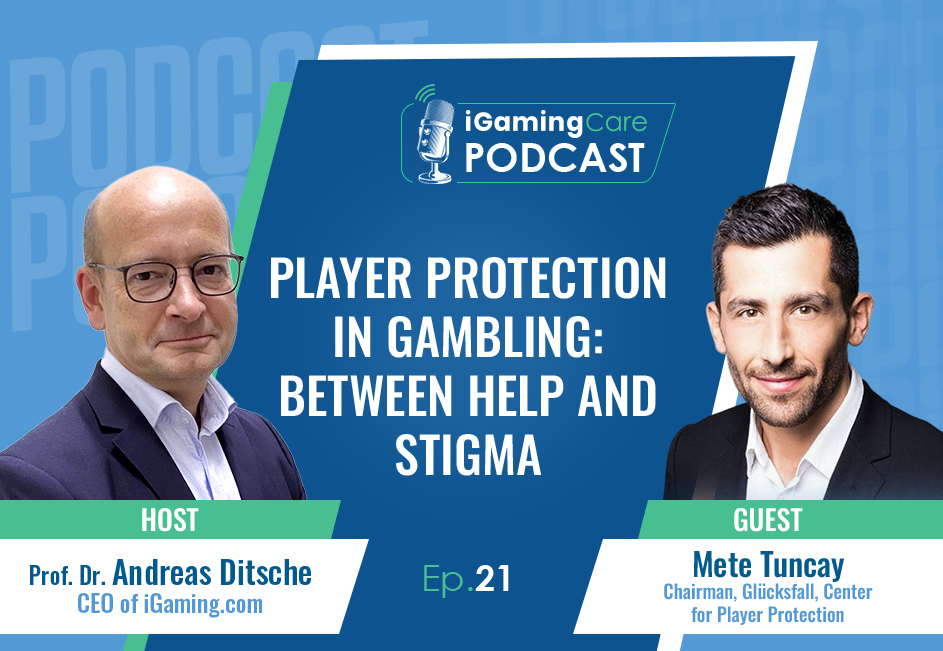
The conversation is in German with English captions on screen.
Ask someone to picture a person with a gambling problem, and they will rarely picture someone they like. Often, the label meant to bring help brings judgment instead, and the people most at risk are the ones society has already pushed aside. That makes stigma one of the biggest obstacles player protection faces today.
That tension is at the center of this short conversation between iGaming.com CEO Prof. Dr. Andreas Ditsche and Mete Tuncay, chairman of Glücksfall – Centre for Player Protection. In the video, they discuss why people who face discrimination are more vulnerable to gambling harm and why help so often fails to reach them.
Tuncay speaks from practice, not theory. He has counseled people with gambling problems in Germany, Malta and across Europe since 2006, and his experience points to a pattern closely tied to the stigma that prevents people from seeking gambling help.
“In my practical experience, it’s often people who are sidelined or discriminated against who are more susceptible to developing problematic or pathological gambling behavior,” Tuncay says.
Exclusion prepares the ground: when recognition and opportunity are missing, gambling steps in as escape and as a false promise of control. As a result, the groups at highest risk are the ones an average-player model never sees.
„Behavioral addiction, the concept of developing a dependency disorder after a reward behavior, is still not treated equally to substance dependencies within societies.“
Mete Tuncay, Chairman of Glücksfall Centre for Player Protection
At the same time, Tuncay is clear that rules alone do not close the gap. Tools such as self-exclusion and deposit and time limits exist in most regulated markets, but measures only protect the people they actually reach. The conversation keeps returning to whether “these measures even reach people.”
Problem gambling is, as Tuncay puts it, too often “dismissed as individual fate.” Without a substance to point to, the disorder is read as weak willpower, affected players learn silence, and help that arrives with judgment attached is help many will never accept.
Watch the full conversation between Ditsche and Tuncay: it goes further into what counselors see that regulations miss, where self-responsibility ends, and where help has to start.
At iGamingCare, we are also working to make help easier to accept. For example, we have launched an AI support chat to assist anyone with concerns about their gambling behavior.
For readers interested in support options, check out our safer gambling tool guides and player protection resources. They offer further insight into how support and dignity can work together.