Article | 2 minutes read
Sweden’s regulated gambling market enters 2026 with two problems that feed into each other. Those are lower trust in licensed play and a steady pull toward unlicensed sites. New survey data on the Swedish casino market shows the extent of the confidence gap and reveals how many players struggle to verify whether a site is licensed.
At the same time, Sweden is reshaping its supervision model. Starting March 1, 2026, the Swedish Gambling Authority, Spelinspektionen, will apply a new fee structure. It introduces per-license charges rather than group-based fees, resets annual supervision costs, and supports a broader enforcement agenda.
When Sweden opened its competitive market under the Gambling Act 2019, it set a channelization goal of 90%. That target has not been hit. The latest data sheds light on what is driving consumers to unlicensed sites. Meanwhile, a regulatory overhaul is aiming to channel more players to regulated operators.
Online gambling remains widely embedded in Sweden. Spelinspektionen’s latest annual survey shows that 72% of Swedes gambled for money in 2025, which is up slightly from the 71% of Swedes in 2024.
According to the CasinoTempen: Survey Study of the Swedish Casino Market 2025, 18% of Swedes are online casino players. CasinoFeber and the independent research institute Reflect Företagsutveckling AB conducted the study.
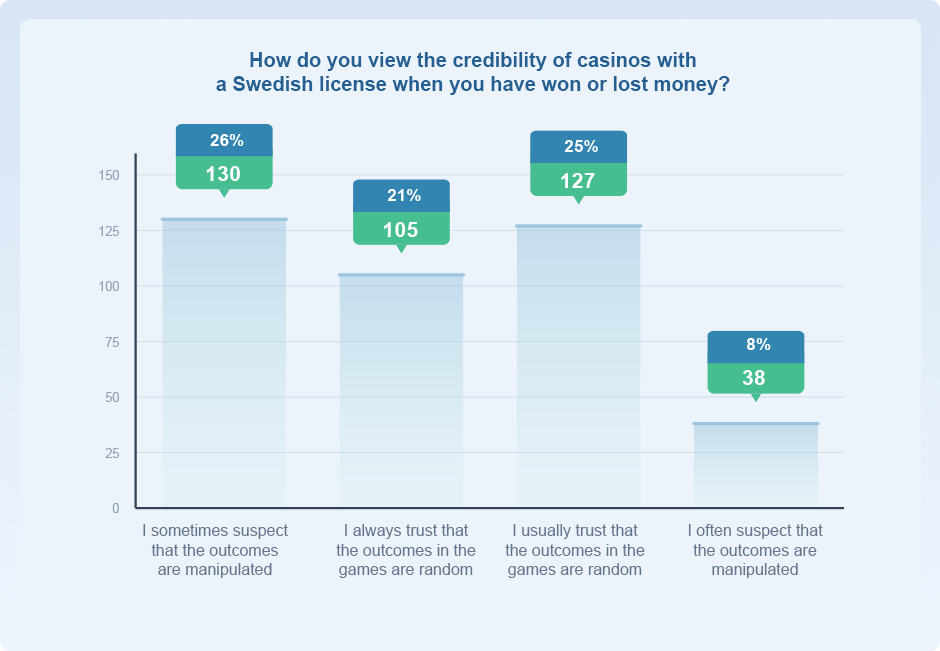
The report helps explain why high participation does not always translate into high confidence. In the study’s online casino overview, 34% of Swedish online casino players say they sometimes or often suspect that the outcomes at Swedish-licensed casinos are manipulated.
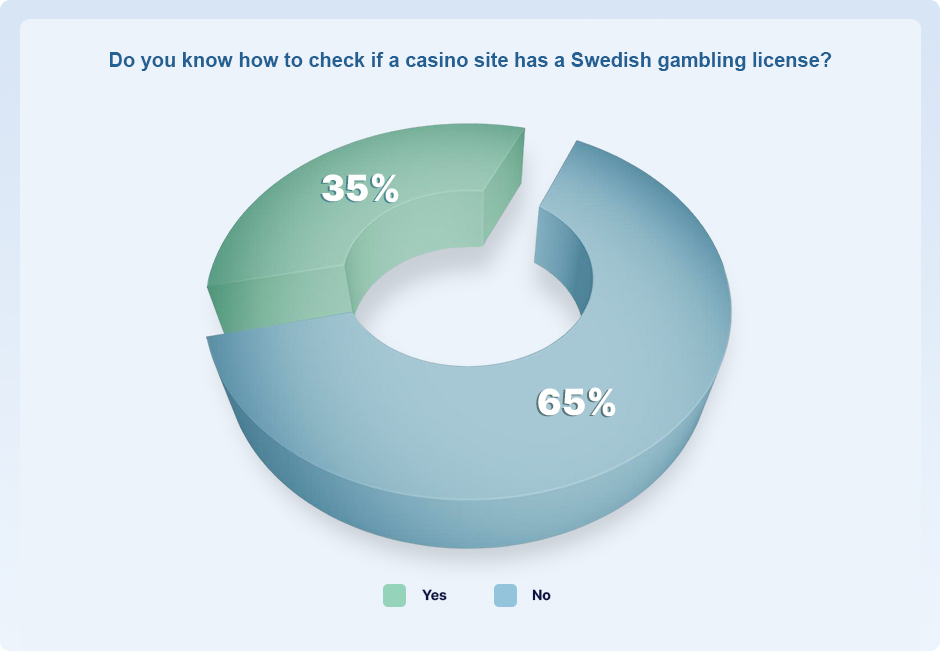
The trust gap is not only about how players feel. It also shows up as a knowledge gap, which in turn makes it harder to stay within the licensed market. In the survey, 65% of online casino players said they do not know how to check whether a site has a Swedish gambling license.
This lack of awareness makes it harder for players to differentiate between legal online casinos and offshore sites. They could unknowingly end up playing on platforms that lack the player protection standards required by licensed operators, such as deposit limits and time-out tools.
The survey also revealed that 18% of respondents reported playing at casinos without a Swedish license in the past year. That’s a notable increase from the 2024 results, showing that unlicensed growth is no longer a marginal signal in the data.
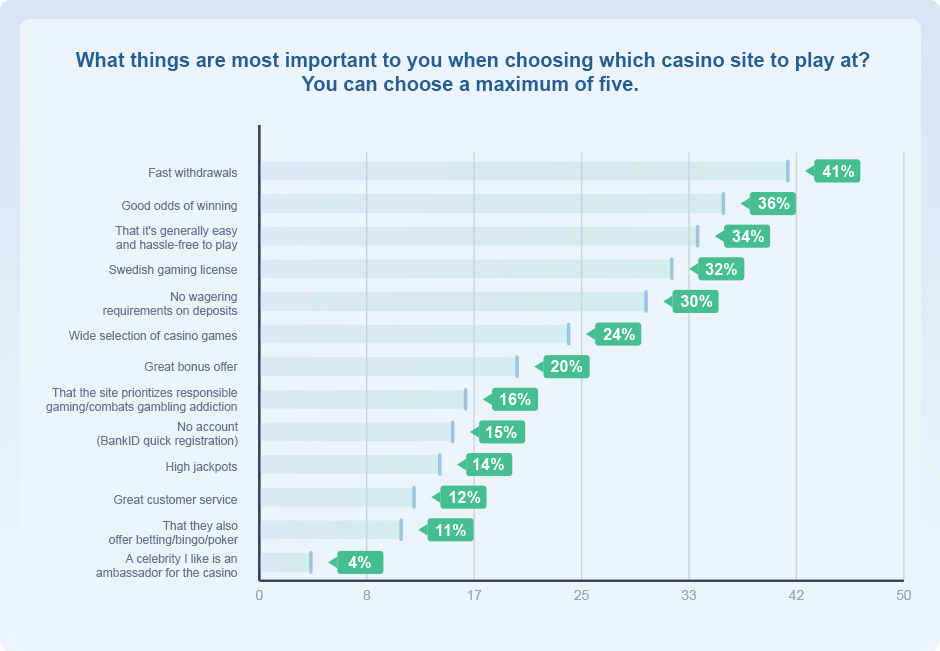
The study highlights what drives a player’s decision about where to play. Fast withdrawals were the top factor. Good odds of winning ranked second, even though the chances of winning are consistent across all licensed Swedish casino sites.
A Swedish gambling license ranked fourth among the most important factors, even though most players did not know how to check for one.
While gambling is reportedly widespread in Sweden, 23% of all casino players said they do not tell anyone about it. That suggests that for many people, playing at online casinos is a private habit that they feel is not socially accepted.
The survey notes that 130,000 people were registered with Spelpaus, the Swedish national self-exclusion register, in September 2025. When questioned about the service, 11% had never heard of it.
Of the respondents who say they play every day, 3% stated that they are currently suspended from gambling through Spelpaus. That suggests they are bypassing exclusion by playing at casinos without a Swedish license.
These findings sit alongside Sweden’s broader channelization issue. Spelinspektionen’s overall channelization estimate for 2024 was 85%, with casinos consistently showing more leakage than betting.
Sweden’s supervision framework shifts again in 2026. A new licensing fee structure takes effect from March 1, 2026, formalized under SIFS 2026:1 and replacing SIFS 2024:4. Under the updated regime, licensed operators must pay fees that reflect their activity volume and the level of regulatory oversight needed.
The factors that matter most for industry stakeholders include:
The fee framework is part of a wider regulatory overhaul. Spelinspektionen has expanded enforcement and penalty powers since January 1, 2026. Planned reforms also aim to widen jurisdiction over unlicensed remote operators from January 1, 2027.
Sweden is also tightening consumer protections around payment methods. A full ban on credit-funded gambling transactions takes effect from April 1, 2026. The restrictions apply to credit cards, personal loans, overdrafts, and buy-now-pay-later products.
| Date | Reform |
|---|---|
| January 1, 2026 | Expanded enforcement powers for Spelinspektionen. |
| March 1, 2026 | The new supervision fee framework starts. |
| April 1, 2026 | Credit-funded gambling ban applies. |
| January 1, 2027 | Planned reform to cover offshore sites targeting Swedes. |
To resolve its channelization issue, Sweden must tackle two leaks simultaneously. One is enforcement-driven, making unlicensed supply harder to access and less profitable. The other is experience-driven, making licensed gambling easier to trust, simpler to verify, and better to use day-to-day.
A per-license supervision fee structure raises fixed costs for multi-license operators. That can tighten budgets for product improvement, payments, and customer service. Those are also the areas Swedish players say they value most, including fast payouts.
Player response is likely to split into segments:
Unlicensed operators will also adapt. If Sweden expands its ability to act against offshore sites and payment routes, unlicensed brands are likely to lean harder on affiliate acquisition, alternative payment flows, and trust-cue marketing. The 65% knowledge gap around license checks creates room for such confusion.
Several factors help explain why Sweden is falling short of its channelization targets. Small frictions can combine into offshore leakage. These include players’ skepticism about fairness, weak license literacy, and a value battle over speed and ease of use.
For policymakers and regulators, three key lessons stand out:
For operators, the data suggests a short list of practical moves that align with what Swedish players already say they want:
If the latest regulatory reforms work as intended, Sweden should see two measurable improvements. These are fewer consumers reporting unlicensed play and a rising share who know how to verify licensing.
If those metrics do not move, the market risks being stuck in a loop where stricter rules raise the stakes of a trust gap and drive further offshore leakage.