Article | 1 minutes read

ESPAD has recently published its 2024 report on alcohol and other drugs, which includes an analysis of problem gambling. The report reveals some concerning trends, such as the high prevalence of gambling among teenagers in Italy and Greece. There are also concerns that the digitalization of gambling is increasing the risk of addiction.
The European School Survey Project on Alcohol and Other Drugs (ESPAD) is a cross-sectional study conducted every four years. It examines substance use and other risk behaviors among European students aged 16.
It was established in 1995 by the Swedish Council for Information on Alcohol and Other Drugs and is supported by the European Union Drugs Agency (EUDA).
“Adolescent substance use and other risk behaviors are rapidly evolving phenomena requiring reliable, continuous, and comparable monitoring over time.”
ESPAD Report
The report targets youths who turned 16 in 2024 and were present at school for the survey. Data was collected from 113,882 students in 37 countries, including Germany, Ukraine, Estonia, and others.
While some countries used pen and paper, many also used computers for the survey. The data collection period was from March to June 2024.
To assess gambling addiction, the report asked students how often they had gambled for money in the last 12 months. The survey also inquired about the games they played and the prevalence of gambling.
According to the results, 23% of respondents had gambled for money on at least one game either online or in a land-based casino. Here’s a breakdown of the countries with the highest gambling prevalence:
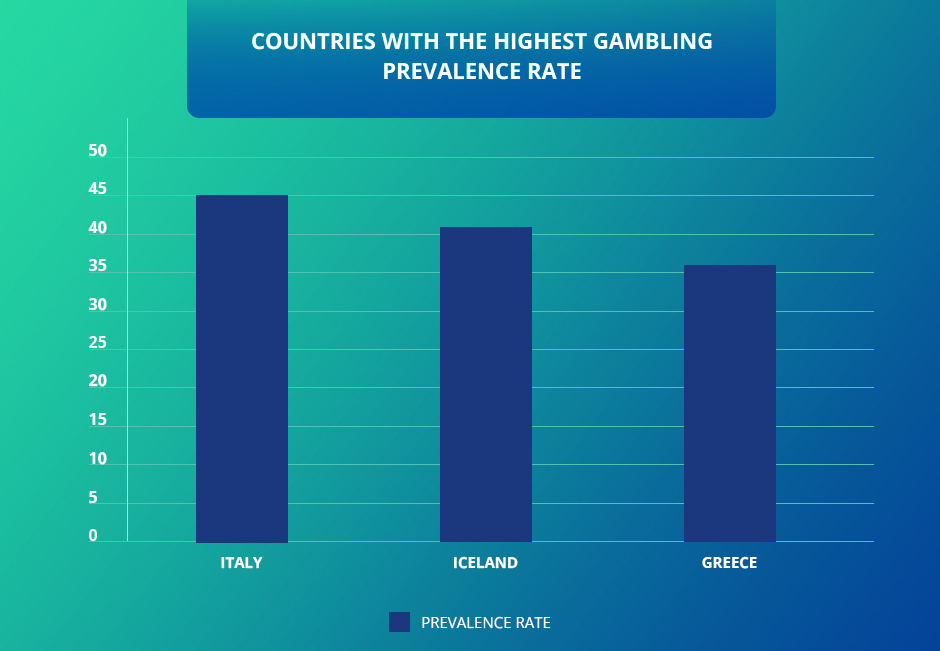
Italian students have the highest prevalence of gambling in general and for land-based games. While 6.6% exhibit signs of problem gambling, the Italian government has introduced new AI compliance tools, coinciding with other EU countries introducing new levies and rules to help combat addiction.
Meanwhile, 11% of Greek students gamble excessively, with boys being the most affected at 44%.
Digitalization is a key factor contributing to the rise of problem gambling, according to the report. As gambling becomes more accessible through mobile devices, young people are increasingly exposed to its risks. That’s why some countries, like Spain, are focusing on improving education to reduce the risk of teenage gambling.
“Overall, the digitalization of adolescents’ lives has not only introduced new opportunities and information channels but also multiplied the possibilities for early exposure to subtle but pervasive forms of addiction.”
ESPAD Report
The report indicates that online gambling of any kind significantly increases the chance of problem gambling behavior. Despite this, the prevalence of gambling among teens has remained a stable 23% since 2015.
According to the report, video games can sometimes lead to gambling issues. That is because they often have mechanics like loot boxes, which introduce gambling elements to younger people.
The report finds that gaming is still predominantly a male hobby. That may explain why many boys prefer online gambling, particularly in Italy and Greece. Students typically spend 2-3 hours playing on school and non-school days.
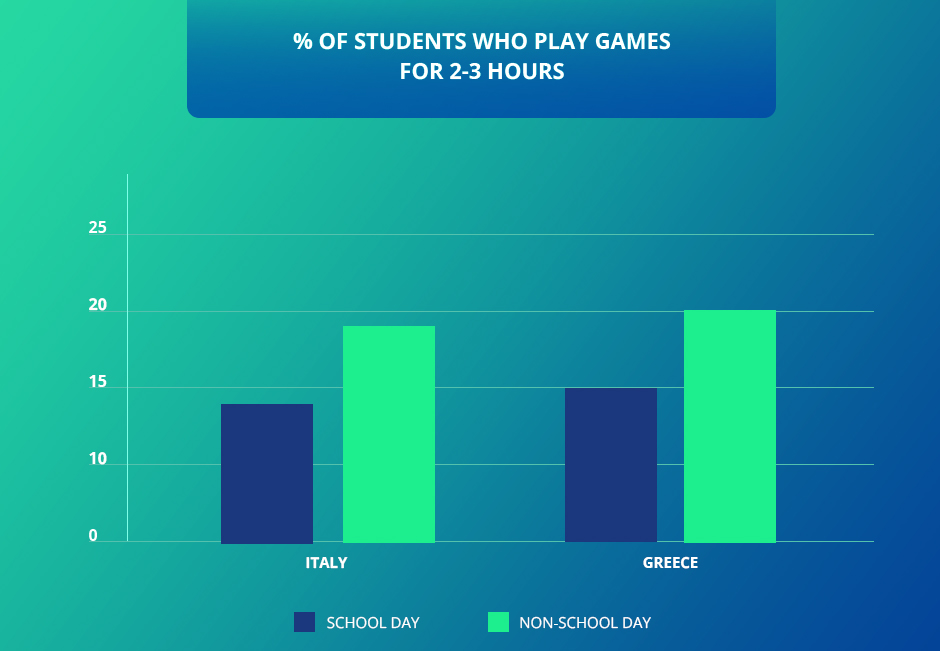
The report shows that 22% of students exhibited self-perceived gaming problems, as indicated by the non-clinical screening tools. Meanwhile, girls report having self-perceived issues with social media. According to ESPAD, new tools in video games and teens’ proficiency with social media have led to an increase in online gambling.
Gambling prevalence varies between boys and girls, depending on the game and how it’s played. Of the 19% of respondents who played land-based gambling games, 25% were boys and 14% were girls. Meanwhile, online gambling has a wider gap of 20% boys and 8.7% girls. Here’s the distribution for Italy and Greece:
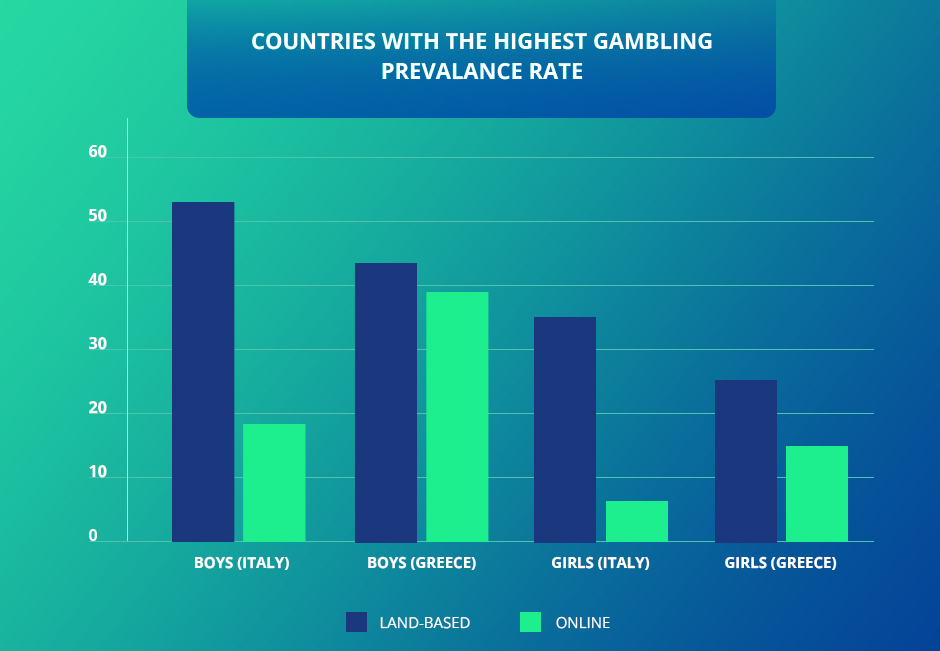
In general, 56% of land-based players prefer lottery games, such as keno, while 55% of online players prefer sports betting. Surprisingly, slot machines are the least popular activity among both land-based and online players.
Despite the prevalence of gambling in Italy and Greece, the average percentage of problem gamblers among students is 6.6% and 7.0%, respectively.
This year’s ESPAD survey introduced a new section on mental well-being, using the WHO-5 Well-being Index to measure the mental state of students. A score of 50 or higher indicates good health.
Almost 40% of the students fell below the threshold, with only 35% of girls in Italy reporting good mental well-being. The report emphasizes that government authorities and educational institutions should place a greater focus on mental health. In its conclusion, the report suggests that countries should:
Research shows that online addictions often stem from emotional vulnerabilities, making good mental health an important factor in preventing addiction. The report highlights the need for awareness campaigns to address not only substance abuse but also the mental health issues that can increase the risk of addictive behaviors.
Additionally, as mobile devices have made gambling more accessible, digital market regulations may be necessary. Even formal bans aren’t enough, as teens would often bypass them, so the report warns gambling addiction will require more attention. Parents should also make use of parental control tools to reduce exposure.