Article | 5 minutes read

The European Casino Association (EAC) commissioned Yield Sec to conduct a report on illegal gambling in Europe. The report revealed startling trends, particularly that illegal gambling revenue now exceeds the legal market by more than double. The EAC warns that black market gambling needs to be stopped to prevent further loss of tax revenue.
Yield Sec is an intelligence platform that monitors the entire online gambling marketplace, including streaming services and crypto. They believe that understanding illegal gambling trends is key to improving the overall market.
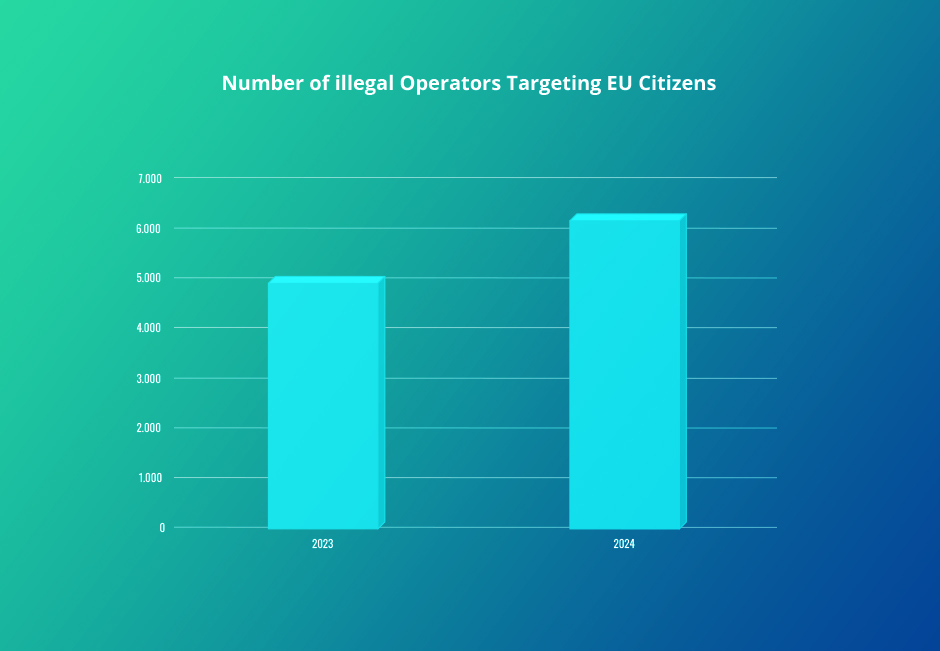
After analyzing data from all 27 EU member states, it found that the number of illegal operators had increased by 26% in 2024.
The surge in illegal operators has fueled the growth of the grey market, pushing its total gambling revenue to €80.6 billion. Conversely, this has resulted in a €20 billion loss in tax revenue across EU member states. Only about €8.4 billion was collected from legal gambling in 2024.
The report also examines why the illegal market has become widespread. One of the reasons is that they skirt the law and lure players by posing as legitimate platforms, often without the necessary licenses.
They also employ aggressive advertising tactics, bypassing regulations designed to curb unsafe gambling ads, and offer products like unlicensed streams. Yield Sec found that around 81 million Europeans of the 118 million that participated in online gambling are more often exposed to illegal operators.
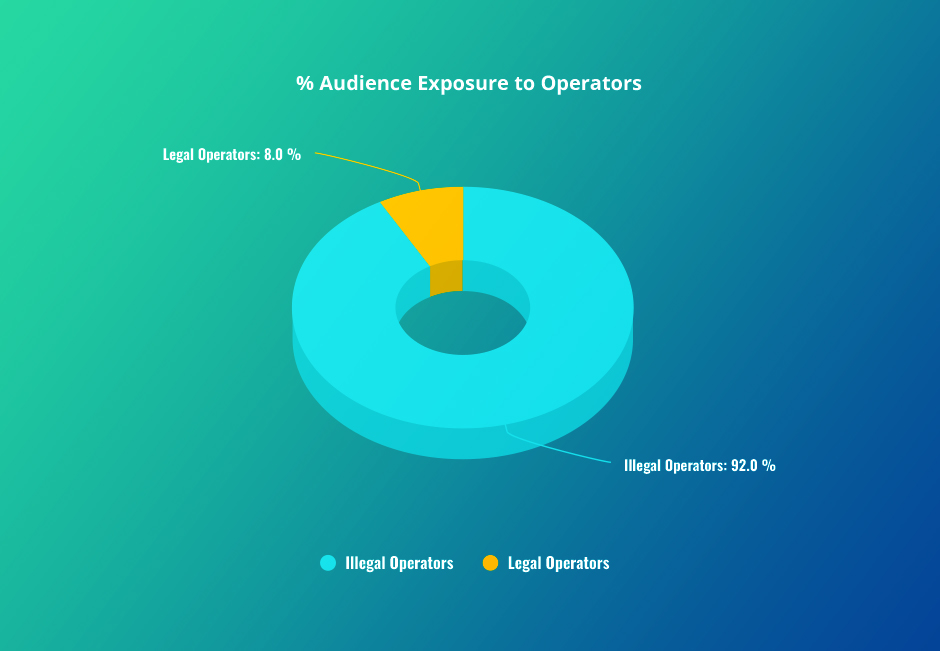
The report also found that 92% of online gambling content Europeans are exposed to promotes illegal operators. That led to 18% of Europe’s total population engaging with them.
According to the data, 82% of the Eastern European gambling market has been captured by illegal operators, meaning regulators must focus on that region. Illegal sites also make up 72% of Western, 55% of Northern and 58% of Southern Europe’s market.
ECA Chairman Erwin van Lambaart stresses the importance of collaborating with national authorities to combat the illegal gambling market. However, even countries with high channelization rates, such as Sweden, are now seeing a reduction to 85%. Some of the reasons for this decrease are:
Spelinspektionen has begun cracking down on illegal suppliers, but it also believes rules shouldn’t be too strict on legal operators.
Germany is a good example of how stringent rules can impact the market, as its 5.3% turnover tax led to a reduction in RTP rates. This led many players to turn to illegal sites, with channelization for online slots falling below 40%.
Fortunately, most European countries have implemented new laws to tackle illegal gambling. Each country has a different approach, with some introducing strict limitations, while others are working on AI tools.
The UK launched a new statutory gambling levy to help fund problem gambling prevention, and introduced laws like:
The UKGC also urges licensed suppliers to ensure they don’t do business with illegal sites. This is to prevent unlicensed operators from obtaining legitimate games.
The Netherlands, one of the youngest markets, is also still developing new laws, such as a universal deposit and loss limit. Other new regulations include:
As Italy is one of the countries with high prevalence of teenage gambling, it’s working hard on a plan to introduce AI-based compliance tools. The plan’s steps include:
It also introduced a new concession program. Finally, it will review the 2018 gambling ban.
As the market continues to expand, stronger regulations will be crucial for maintaining a fair and safe environment. That’s why the EU recently approved EGBA’s standard on markers of harm, which will help member states protect players more efficiently.
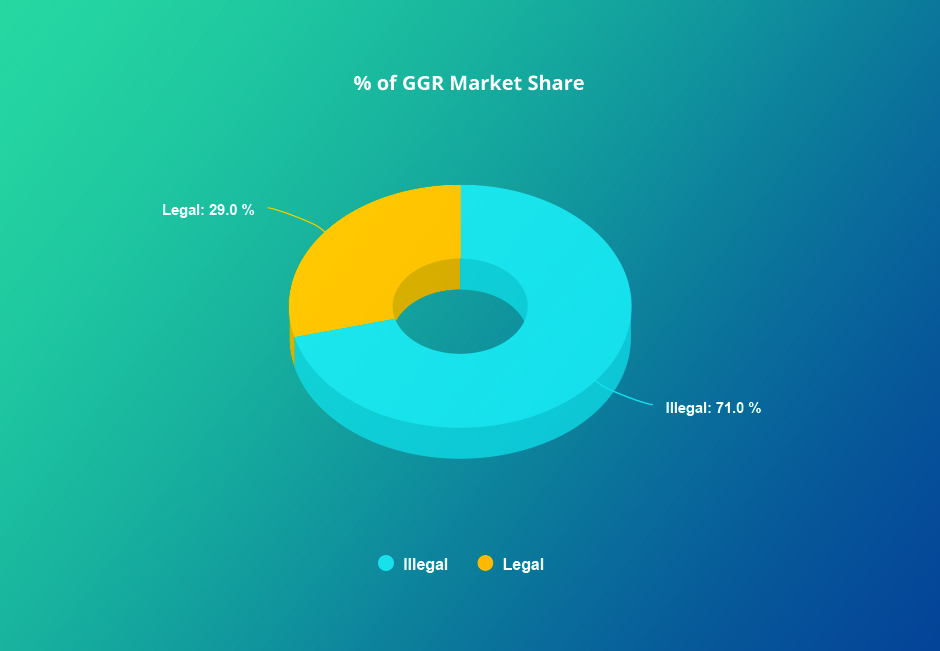
According to Yield Sec, illegal operators account for a staggering 71% of the €114.3 billion gross gaming revenue market share, while the legal ones occupy only 29%.
When commenting on the report, the ECA Chairman emphasized that illegal operators pose significant economic and societal threats. European countries will need to collaborate closely with organizations such as the ECA and operators themselves to create a more favorable legal environment for players.