Article | 5 minutes read
Regulators across Europe have improved their measures to prevent money laundering and ensure social responsibility. Despite this, non-compliance remains an ongoing issue, driven by rapidly changing regulations and the rising cost of maintaining compliance tools. If the industry wants to continue expanding sustainably, this problem must be addressed.
Regulators across Europe continue to address non-compliance cases and issue fines, despite stricter frameworks and oversight. Spain recorded one of the highest volumes of cases, issuing €142.7 million in fines in 2024, just shy of the estimated Europe-wide total of over €150 million.
Spain’s Ministry of Social Rights, Consumer Affairs, and Agenda 2030 has published all finalized sanctions from late 2021 to mid-2024. These cases are distributed as follows:
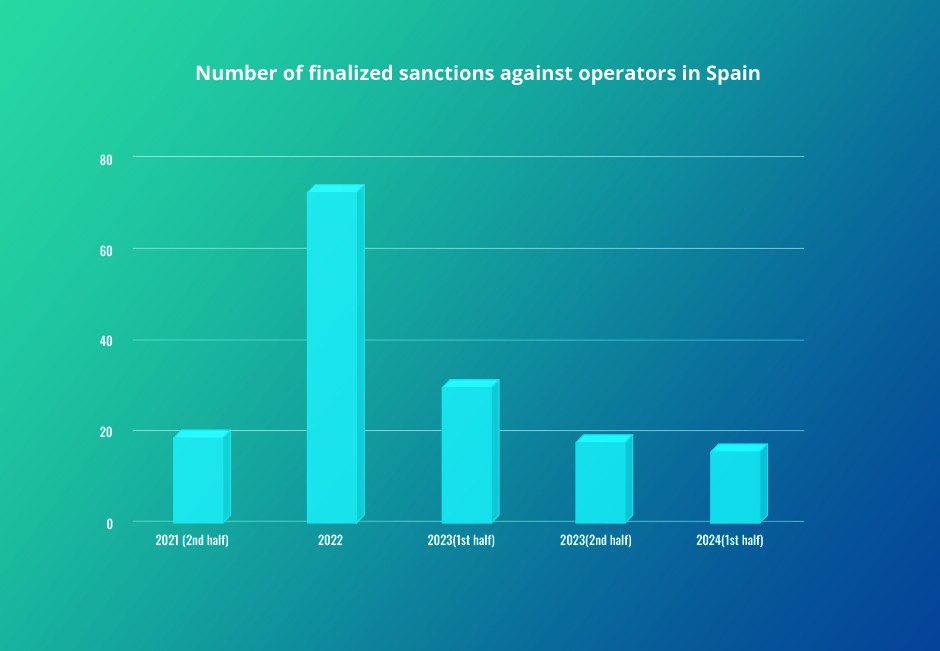
The sharp rise in 2022 aligns with the introduction of a royal decree that strengthened responsible gambling requirements.
Meanwhile, in the United Kingdom, the UKGC continues to tighten its restrictions with new measures for improving gambling harm prevention funding. According to a recent report, the Commission issued £4.2 million in fines and settlements against 24 operators between April 1, 2024, and March 31, 2025.
As regulatory expectations expand, operators face mounting pressure. One key driver of continued non-compliance is the fast pace of regulatory change.
While companies are willing to work with regulators, the growing regulatory burden makes it hard to balance profitability with protecting customers. Operators must now invest heavily in personnel and technology simply to keep up with the new requirements.
“The cost of compliance has increased massively. Operators are unable to divert sufficient funds to this function.”
Melanie Ellis, Partner at Northbridge Law
Younger people are also more likely to play online. To keep up with this trend, operators must invest in new technology and customer experience tools, adding further strain to already stretched compliance budgets.
Countries like the Netherlands are also facing issues because the regulated online gambling market is only four years old. As new rules emerge, such as stricter fining rules with penalties of up to €4 million, operators may struggle to adapt to changes.
Another factor behind regulatory breaches is that some brands are expanding globally. Each market has different rules, which is one of the main reasons why Europe can’t align on a safer gambling standard.
Moreover, only recently has the EU approved a standard on markers of harm. Given the regulatory nuances across different countries, it may take some time for operators to adjust to each new market’s regulatory expectations.
“Enforcement often results from operators grappling to understand and keep on top of multiple differing legal systems across jurisdictions.”
Tamsin Blow, Lawyer at CMS London
In most cases, breaches are not deliberate; they are rarely profitable, and the reputational risk is far greater. Additionally, the UKGC is among the strictest regulators in Europe and monitors operators closely. That means it often has a higher rate of reporting breaches, whereas other regulators conduct only limited checks.
One way the UKGC is attempting to curb infractions is through the new Regular Feed of Operator Core Data project. It will help the Commission better understand player behavior, including which safer gambling tools customers use and how they interact with them.
This level of data insight could shape future regulations and allow for earlier detection of harmful behavior. Some of the specific information they’re looking for includes:
Collecting this data will require the help of operators. Despite current issues, operators have shown significant improvements in social responsibility compliance.
Regulators, such as the UKGC, prefer addressing issues alongside operators rather than issuing more fines and suspensions. EGBA has also warned that excessive fines may drive casinos into the black market, making collaboration even more crucial.
Many instances of non-compliance stem from the growing pains faced by regulators and operators. Although some countries, such as Belgium and Italy, take a tough stance against infractions, many regulators are helping operators resolve issues.
Collaboration is key, helping prevent future breaches by clarifying rules and expectations. Operators are also motivated to work alongside regulators to maintain a good reputation and improve the customer experience. Proactive communication between operators and regulators will be essential to achieving a safer, more sustainable European gambling market.