Article | 7 minutes read
Player protection software, such as GameScanner, detects risky behavior and enables operators to intervene early. But what does intervention look like in practice?
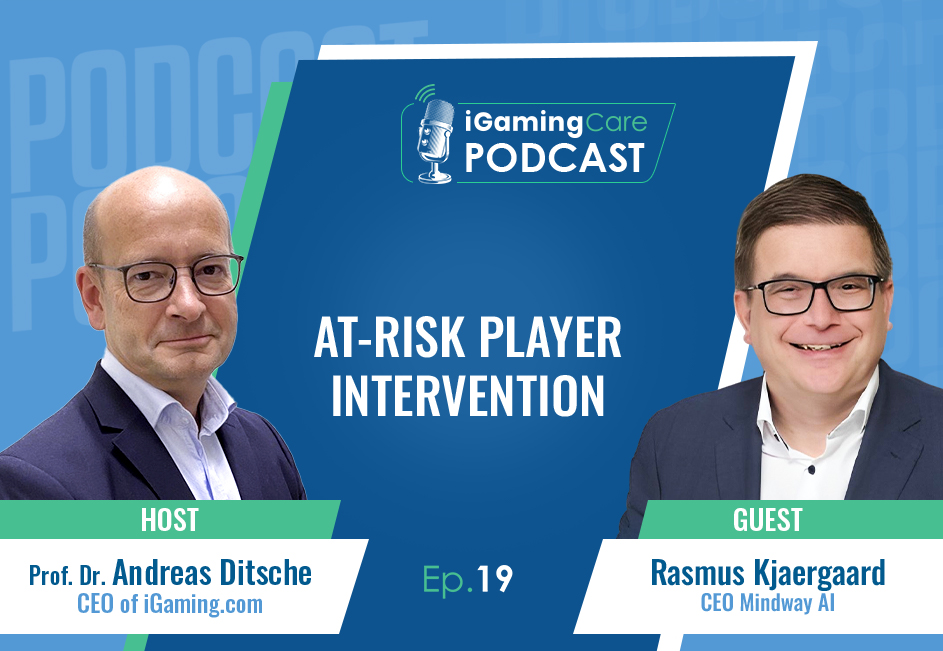
In this short video, iGaming.com CEO Prof. Dr. Andreas Ditsche asks what happens after a player is flagged. Mindway AI CEO Rasmus Kjaergaard explains the actions operators can take to protect players.
Mindway AI’s GameScanner uses supervised AI to detect problem gambling behavior. Kjaergaard notes that best practices for interaction and intervention when harm is identified are under-researched. However, he highlights that it is important for operators to act.
Intervention can start with broad, safer gaming reminders. Operators could then move on to personal messages, such as prompts to set deposit limits or to take a self-assessment test.
Direct outreach from support teams is another common practice. When customer service agents call a customer, it can lead to treatment referrals, self-exclusion, or even account closure.
Kjaergaard explains that GameScanner can record that an intervention happened and display it alongside the player’s ongoing risk score. This helps teams see whether behavior changes after contact and decide who needs closer monitoring.
He also emphasizes the opportunity to act earlier, even when operators worry about disturbing their customers. Some companies, he says, have publicly linked earlier action to better long-term outcomes, including fewer regulatory issues and stronger player lifetime value.
“The opportunity of improvement for gambling operators is to do much more much earlier.”
Rasmus Kjaergaard, Mindway AI CEO
You can watch the full interview with Rasmus Kjaergaard on our YouTube channel for more insights into Mindway AI’s innovative approach to player protection.
You can also find more interviews, safer gaming tool guides, and the latest responsible gambling news on iGamingCare.